Cyber Security Department
Cyber Security Department — Maritime Communications Division
Cyber Security Department — Maritime Communications Division
Projects
Video / Photo Gallery
Background
In mid-February 1965, Myanma Posts and Telecommunications moved the international maritime radio office, known as Burma Coast Radio Station – Rangoon Radio, call sign XYR, from Thanlyet Soon Naval Base to the telecommunications compound in Pyin Htaung Kyaung village, Thanlyin Township. Using radiotelephony and Morse telegraphy equipment, the High-Frequency Receiving and International Maritime Radio Station (Yangon Radio–XYR) provided radio reception for maritime safety, natural-disaster protection and search and rescue for ships at sea.
The International Maritime Organization (IMO) required implementation of the Global Maritime Distress and Safety System (GMDSS) by 1 February 1999. Myanmar, an IMO member, installed VHF and MF/HF (SKANTI) equipment at Thanlyin and VHF (SKANTI) equipment at Myeik on that date. In 2013, VHF, MF/HF (SAILOR), Inmarsat mini-c (receive only) and VHF, MF/HF (SAILOR) GMDSS equipment were installed and used for these duties.
An IMO audit from 24 February to 5 March 2018 identified, under Finding 15 of its final corrective action plan, the need for radio stations covering Myanmar’s coastline. The project “New Setting of 19 Radio Stations along Myanmar Coastal Area by Upgrading Global Maritime Distress and Safety System (GMDSS) Machines” was entered into the national Project Bank and implementation began in fiscal year 2019–2020. International maritime radio and GMDSS work was previously handled by MPT’s overseas communications department, transferred to the Information Technology and Cyber Security Department on 1 April 2015, and has been the responsibility of the Cyber Security Department’s Maritime Communications Division since 29 June 2026.
Policy
Use ICT effectively in natural-disaster and emergency management.
Objective
Use information and communications technologies to provide timely support for the safety of coastal and offshore vessels in Myanmar’s coastal waters and to manage emergency rescue when incidents occur.
Responsibilities
GMDSS stations broadcast weather reports, navigation information and storm warnings at scheduled times to help protect coastal and offshore vessels, fishing boats and cargo ships from natural disasters. When distress messages are received from vessels or aircraft in Myanmar’s maritime territory, the division promptly forwards relevant information, including precise locations, to the Maritime Rescue Coordination Centre (MRCC) and Myanmar Coast Guard (MCG).
Contact
Division: Maritime Communications Division
Name: U Win Min Latt
Position: Deputy Director
Telephone: 09424000168
Email: wlatt293@gmail.com
Address: Information Access Center
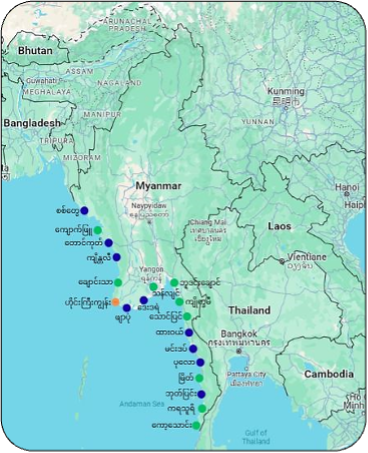
Project to Upgrade GMDSS Equipment and Establish 19 Coastal Radio Stations
Completed: 9 stations
Remaining: 9 stations
Scheduled for fiscal year 2026–2027: 1 station (Hainggyi Island)
Equipment at GMDSS Stations
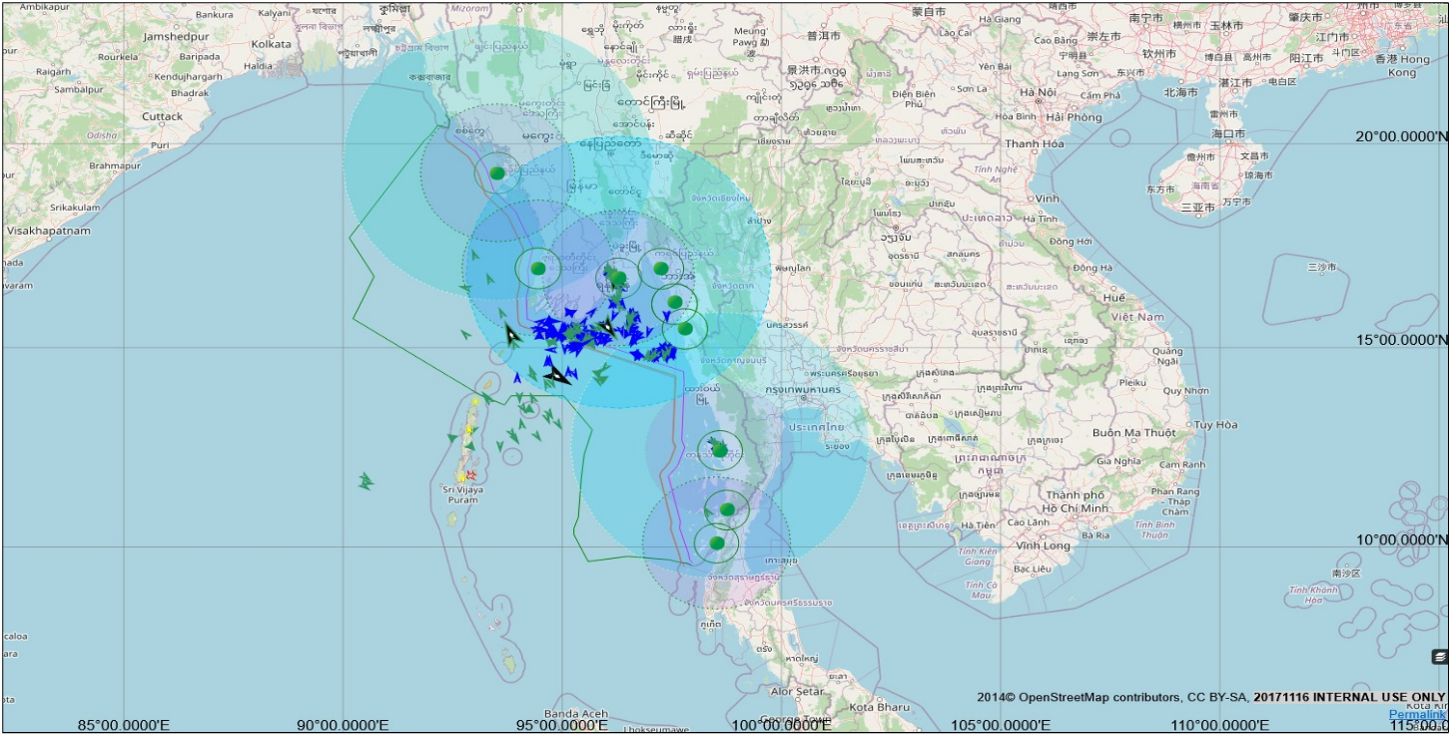
Class A — Thanlyin, Myeik and Kyaukphyu; coverage: 200 nautical miles
Very High Frequency (VHF)
Medium/High Frequency (MF/HF)
Automatic Identification System (AIS)
Navigational Telex (NAVTEX), transmit and receive
Class B — Chaungtha and Kawthaung; coverage: 100 nautical miles
VHF
MF/HF
AIS
NAVTEX, receive only
Class C — Kyaikkhami, Thaung Pyin, Budein Chaung and Karathuri; coverage: 30 nautical miles
VHF
AIS
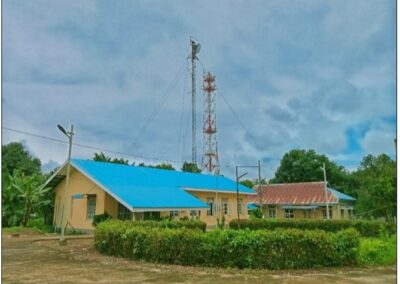
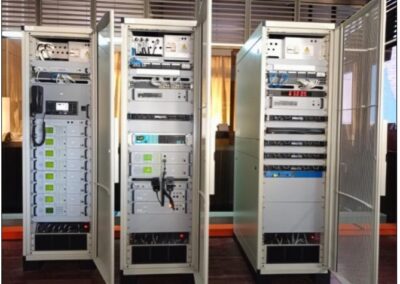
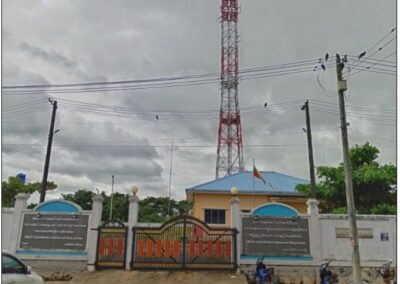
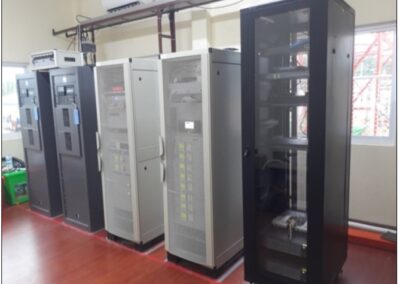
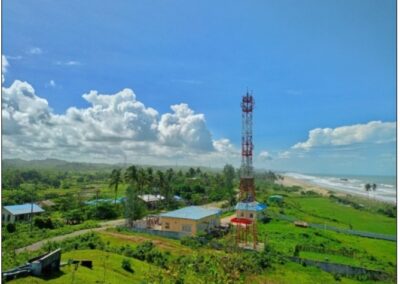
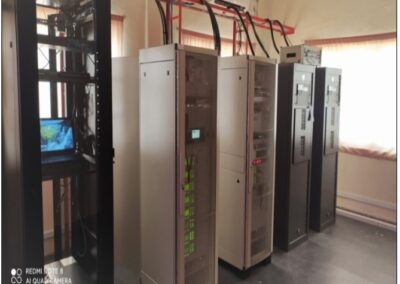
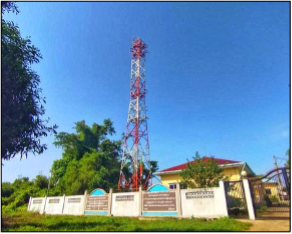
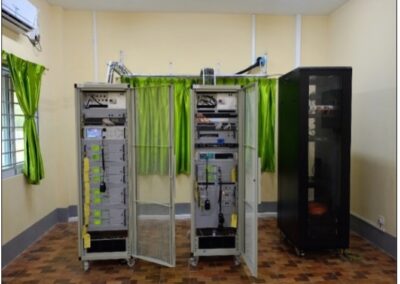
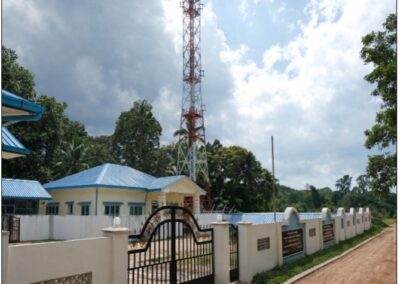
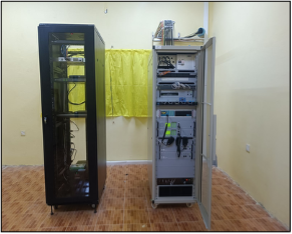
Photographic Records of Completed GMDSS Stations
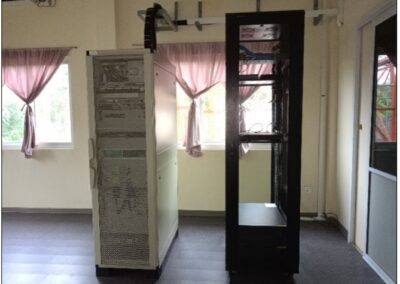
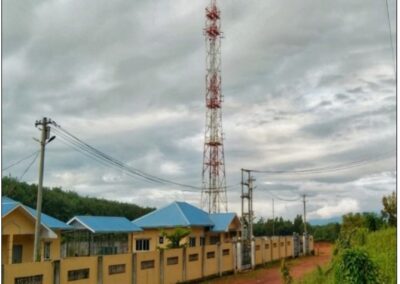
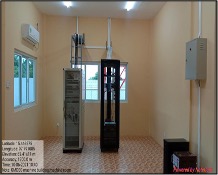
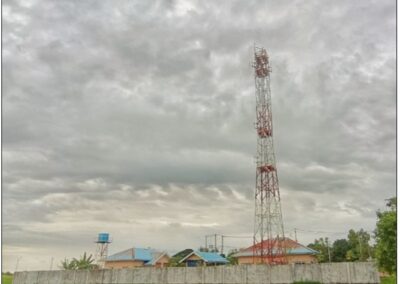
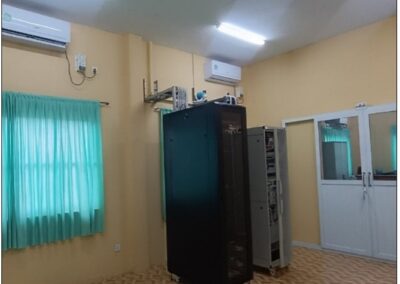
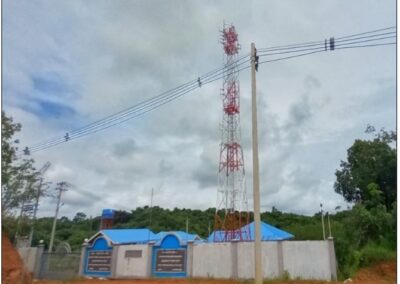
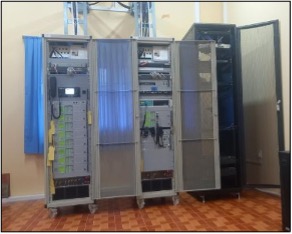
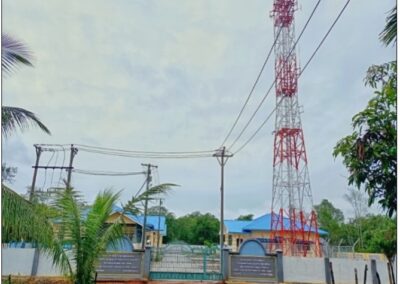
Thanlyin GMDSS station, NCC and server room (2019–2020)
Myeik GMDSS station and server room (2019–2020)
Kyaukphyu GMDSS station and machine room (2019–2020)
Kyaikkhami GMDSS station and machine room (2019–2020)
Thaung Pyin GMDSS station and machine room (2020–2021)
Budein Chaung GMDSS station and machine room (2021–2022)
Chaungtha GMDSS station and machine room (2022–2023)
Kawthaung GMDSS station and machine room (2023–2024)
Karathuri GMDSS station and machine room (2024–2025)
Maritime radio coverage along Myanmar’s coast from the nine completed GMDSS stations
Cyber Security Department — Satellite Communications Division
Cyber Security Department — Satellite Communications Division
History
Policy
Objectives
Responsibilities
Contact
Information
Photo Gallery
Background
In 1989, MPT built a Standard B Satellite Earth Station at Toe Kyaung Kalay for international communications. In 1991 it built earth stations in six Upper Myanmar towns and six Lower Myanmar towns and leased AsiaSat capacity for domestic satellite services, initially using voice circuits for telephone calls. In 1993, under the International Telecommunication Improvement (ITI) Project, it built an Intelsat Standard A earth station with an 18.3-metre antenna at Pyin Htaung Kyaung, Thanlyin, adding data communications to international voice services. Myanmar Radio and Television could also broadcast abroad through Intelsat. At that time, a television channel was transmitted and received in analogue form; digital microwave equipment from SIEMENS carried an E3 144 Mbps carrier to the International Telecom Maintenance Center (ITMC) in Mayangon. About a year later, a smaller E2 45 Mbps carrier from SIEMENS became available.
Thailand launched ThaiCom 4, known as iPstar, in 2005 and ThaiCom 5 in 2006. After the AsiaSat 1 satellite used for Myanmar’s domestic communications reached the end of its service life, services moved to ThaiCom 5. VSAT (Very Small Aperture Terminal) antenna systems provided E1 backhaul to townships without microwave or fibre links, enabling automatic exchanges and mobile base transceiver stations to provide fixed and mobile telephone services. In 2006, Myanmar began using the Ku- and Ka-band ThaiCom 4/iPstar satellite, as other countries did. Satellite communications then began using Internet Protocol, assigning an IP address to each terminal for access to the satellite IP network.
MPT built an iPStar satellite hub at Toe Kyaung Kalay earth station to distribute internet nationwide and improve communications to remote villages using Voice over IP. MPT discontinued use of ThaiCom 4/iPStar in 2023.
Under Union Government Meeting No. 2/2015 of 15 January 2015 and Minister’s Office Notification No. 9/2015, the Information Technology and Cyber Security Department was established on 1 April 2015 with eight divisions, including satellite communications. The satellite unit initially comprised space and ground-station divisions and provided services using Myanmar’s MyanmarSat-2 system. With approval from Union Government Meeting No. 3/2025, Ministry of Transport and Communications Notification No. 47/2025 of 23 July 2025 reorganised the department into ten divisions. Satellite communications was reorganised into commercial affairs and satellite communications technology sections.
The department implemented MyanmarSat-1 in 2016 and MyanmarSat-2 in 2018. As demand for high-speed internet grew, satellite stations adopted high-speed satellite hub systems. The Thanlyin earth station has used iDirect and Newtec hubs since fiscal year 2018–2019. Satellite communications plays an essential role in 4G/5G mobile systems. MPT, ATOM, U9 and Mytel widely use satellite backhaul for mobile and internet services in areas without microwave or fibre links. Operators are launching high-throughput satellites offering fibre-like speeds as well as low-earth-orbit satellites providing internet directly to mobile devices, described in the source as Device-to-Device (D-to-D) technology.
Policy
Support national and public socioeconomic development through satellite communications.
Objective
Use Myanmar-owned satellite systems to serve areas needing communications and apply ICT effectively to disaster and emergency management.
Responsibilities
1. Monitor, control and manage MyanmarSat-2 transponders.
2. Check whether government departments, domestic companies and organisations use leased bandwidth and frequencies as authorised, and resolve customer complaints.
3. Maintain satellite earth-station equipment and associated systems, including hubs, antennas, radio-frequency equipment, generators and UPS systems.
4. Coordinate technical matters with the satellite operator.
5. Provide industrial training and internships to technological and computer university students to develop space and satellite communications skills.
Contact
Division: Satellite Communications Division
Name: Daw Hnin Mya Mya Moe
Position: Director
Telephone: 067-3407713
Email: ce.itcs@e-moddc.gov.mm
Address: Office No. 2, Nay Pyi Taw
About MyanmarSat-2
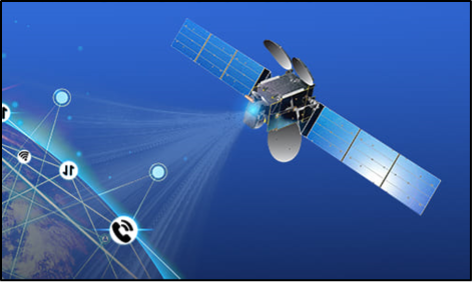
Implemented in 2018, MyanmarSat-2 occupies the 61.95° East orbital slot in geosynchronous Earth orbit. Its service life is 15 years, from 2019 to 2034.
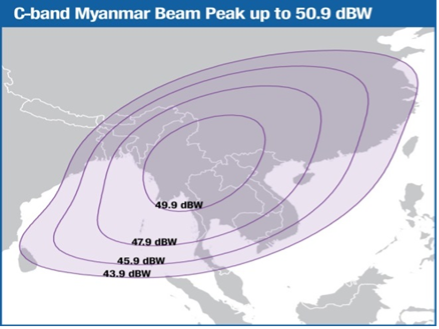
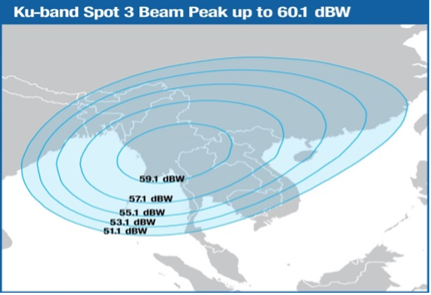
It provides 432 MHz in C-band and 432 MHz in Ku-band, for a total of 864 MHz.
MPT uses it to provide mobile and internet services in remote areas.
Since 1 February 2022, MRTV has used MyanmarSat-2 for direct-to-home television broadcasting. The public can receive clear, free broadcasts around the clock using a two-foot dish.
MRTV also uses it for live coverage of national ceremonies and parliamentary meetings.
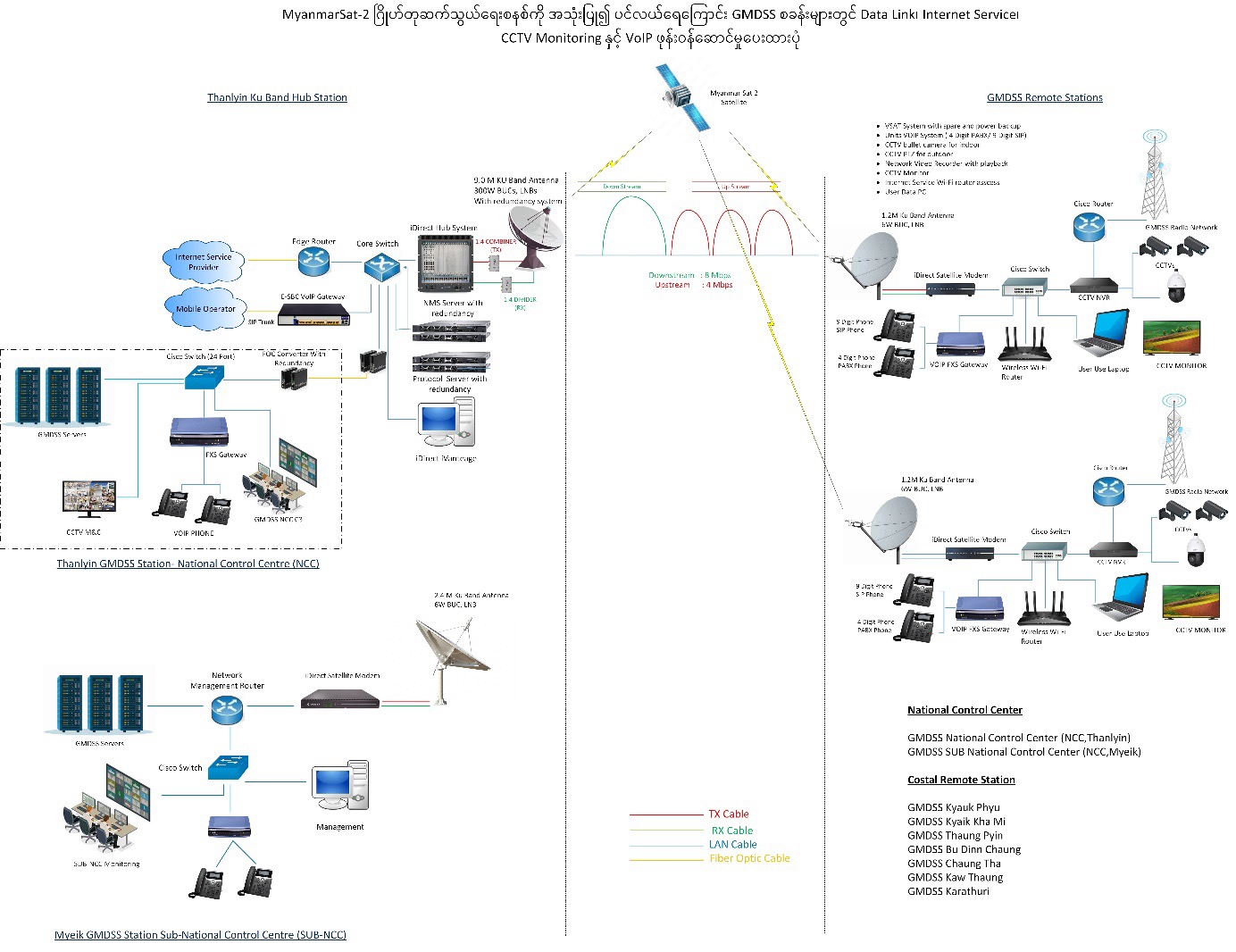
It supplies internet and VoIP telephone services to GMDSS maritime radio stations and offshore oilfields.
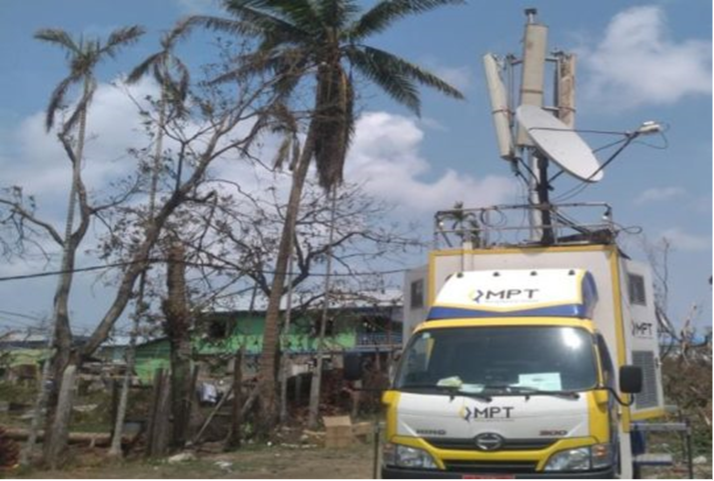
After Cyclone Mocha struck Rakhine State on 14 May 2023, MyanmarSat-2 provided emergency communications that enabled rapid and effective disaster management, response, relief and rehabilitation.
The 1.2-metre VSAT equipment, VoIP phones and internet installed at the Thanlyin, Myeik, Kyaikkhami, Kyaukphyu, Thaung Pyin, Budein Chaung, Chaungtha, Kawthaung and Karathuri GMDSS stations support search, rescue and rehabilitation during disasters.
In Kachin, Kayah, Chin and Rakhine states and Mandalay and Sagaing regions, where communications have been disrupted, MyanmarSat-2 provides mobile and internet services for administration, security, economic and social activities, supporting national and public socioeconomic development.
It can support satellite-based CCTV security systems for border security and immigration operations.
It can provide infrastructure for e-government and online services.
In remote areas with limited educational, health and social development, cooperation with telecommunications operators can enable mobile e-learning centres, small hospitals using telemedicine, and satellite-based Wi-Fi internet services.
Compared with leasing overseas satellite bandwidth, it reduces costs and foreign-currency expenditure.
From 2022 to July 2026, a total of 168 students from technological universities, computer universities and Naypyitaw State Academy received satellite communications instruction through internships and industrial training.
Figure 1: MyanmarSat-2 satellite
Figure 2: MyanmarSat-2 C-band footprint
Figure 3: MyanmarSat-2 Ku-band footprint
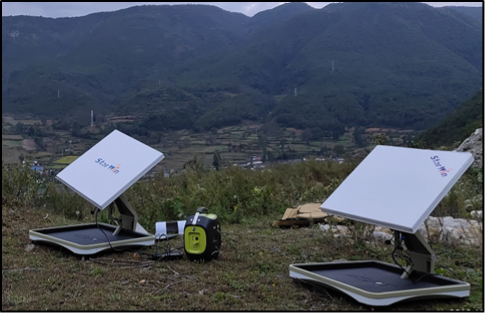
Figure 4: A portable Ku-band VSAT terminal enabling mobile and internet access, including in remote areas, beyond the limitations of terrestrial mobile, microwave and fibre networks
Figure 5: Internet, VoIP and CCTV security monitoring at maritime radio stations through MyanmarSat-2
Figure 6: MyanmarSat-2 used for emergency communications during Cyclone Mocha relief and rehabilitation in Rakhine State
Cyber Security Department — Myanmar Computer Emergency Response Division
Cyber Security Department — Myanmar Computer Emergency Response Division
Contact
1. Cybersecurity incident response. The division handles reported incidents from across the country and provides the necessary technical advice and assistance.
2. Cybersecurity awareness. It organises annual awareness-video competitions; shares cybersecurity knowledge, including online fraud awareness, with government staff and university and college students; and holds cybersecurity exhibitions and competitions at national events.
2. Cybersecurity capacity building. It organises the annual Myanmar Cyber Security Challenge, sends participants to international competitions including the ASEAN Cyber SEA Game, and arranges domestic and overseas cybersecurity training.
4. Regional and international cooperation. It works with international cybersecurity organisations to share attack information, conduct drills and exercises, participate in workshops, exchange technical expertise and implement cooperation programmes between countries.
Contact
Division: Myanmar Computer Emergency Response Division
Name: U Kyaw Soe Naing
Position: Director
Telephone: 0673422272
Email: director.mmcert@e-moddc.gov.mm
Address: Ministry of Digital Development and Communications, Office No. 2, Nay Pyi Taw