“Delivering across the world without fail for 150 years”
On 9 October 2024, the Universal Postal Union marked 150 years since its establishment and the introduction of methods and rules for an orderly worldwide postal service. Its endurance reflects determined leadership and the cooperative spirit of member countries.
The UPU is the world’s second-oldest international organisation after the International Telecommunication Union. It supports members with technical assistance and procedures so postal services can keep pace with technological change.
History of Postal Services
Before 192 countries came together through the UPU to manage global postal matters, postal activity had a long history. The earliest evidence described here comes from Egypt around 255 BC. Earlier communication included pigeons, smoke relays and drums or other sound signals. Kings and local rulers used runners and mounted couriers for administration. Landowners and others in ancient Egypt, Greece and Rome entrusted important letters and documents to reliable people or organisations for a fee. Although not yet a public service accessible to most people, these were early steps towards modern post.
People wishing to send letters and parcels faced prices set independently by providers. The Industrial Revolution, from the mid-eighteenth to early nineteenth centuries, introduced railways and steamships and transformed economic and social life. Efforts grew to harmonise countries’ separate postal procedures, prices and standards for international service. Early bilateral agreements helped the countries involved, but further negotiations were needed to exchange mail with others, causing delays.
Efforts to Establish a Postal Organisation
In 1840, Sir Rowland Hill introduced prepaid postage stamps, allowing a uniform domestic letter rate. On 11 May 1863, United States Postmaster General Montgomery Blair convened the Paris Postal Conference. Fifteen representatives from European and American countries agreed principles for postal agreements, but did not resolve the difficulties of international mail.
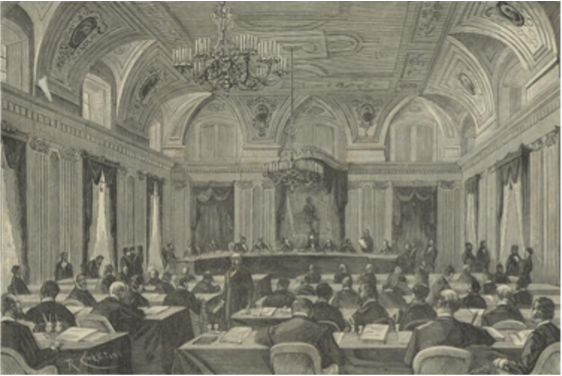
Senior postal official Heinrich von Stephan of the North German Confederation was tasked with finding solutions. His efforts led to a Swiss-government-sponsored meeting in Bern on 15 September 1874. Diplomats and postal participants discussed a Swiss initiative for a global postal system. They addressed postal matters, specifications, standards and prices, agreeing on a unified system as a first step towards modern international post.
Purpose of the UPU
On 9 October 1874, representatives described in the source as coming from 22 countries signed the Treaty of Bern and established the General Postal Union. The source names Germany, Austria-Hungary, Belgium, Denmark, Egypt, Spain, the United States, France, Great Britain, Greece, Italy, Luxembourg, Norway, the Netherlands, Portugal, Romania, Russia, Serbia, Sweden, Switzerland and Turkey. The treaty sought common rules and rates to simplify and standardise international postal services. Headquarters were established in Bern, and more postal countries joined within three years. At the Paris Congress of 1878, described in the source as the first congress, the organisation was renamed the Universal Postal Union, the name it retains today.
Administrative Reforms
The following account covers cooperation with member countries over 150 years, technical and procedural development, rules and postal strategies.
Initially the UPU consisted only of the Congress of member countries and the International Bureau. As needs grew, the 12th Congress in Paris in 1947 established the Executive and Liaison Committee, now the Council of Administration (CA). The 14th Congress in Ottawa in 1957 established the Consultative Committee for Postal Studies, now the Postal Operations Council (POC).
The 17th Congress in Lausanne in 1974 decided to include provisions in the UPU Acts and Convention enabling member countries to elect the International Bureau’s Director General and Deputy Director General by vote.
These changes progressively adapted the organisation to contemporary needs. Alongside institutional reform, the UPU addressed operational and technical requirements to make postal services easier to use worldwide. Congresses also coordinated solutions to legal and procedural barriers between countries.
Decisions on Postal Services
The second Congress in Paris in 1878 introduced money orders. The third Congress in Lisbon in 1885 established standards enabling parcel services for bulky items across four continents.
The sixth Congress in Rome in 1906 approved free correspondence and money orders for prisoners of war and introduced the International Reply Coupon (IRC). A sender could prepay return postage from another country. This was useful for requesting information or documents, enrolling in schools and universities and replying to overseas invitations, saving postage costs and becoming widely used.
As industry and aviation developed, the ninth Congress in London in 1929 decided to include airmail provisions in the UPU Convention. The 11th Congress in Buenos Aires in 1939 demonstrated the Phonopost voice-mail service to participants.
Postal operations suffered delays during both world wars, but efforts continued to keep services available. Drawing on these experiences, the UPU began cooperation with the United Nations in 1948 and became a specialised UN agency.
While modernising postal technology, the UPU also developed policies and activities enabling the postal sector to contribute to socioeconomic objectives in the UN’s 2030 Agenda for Sustainable Development.
The 13th Congress in Brussels in 1952 approved free postal transport of literature for the blind. The 15th Congress in Vienna in 1964 established English, Arabic, Chinese, Russian and Spanish language groups alongside official French, enabling translation of decisions, meeting records and instructions for easier cooperation.
The 16th Congress in Tokyo in 1969 designated 9 October as World Post Day to commemorate the organisation’s founding. Members have celebrated it annually ever since. The congress also approved terminal dues, important to settlement of charges between countries sending, receiving and forwarding international mail.
In 1971, an Executive Meeting decision established the International Letter-Writing Competition for Young People aged 15 and under. Young students from member countries participate in English on a prescribed theme. The competition demonstrates the postal sector’s contribution to Sustainable Development Goal 4, quality education, and encourages understanding of the post, creative letter-writing and friendship between young people internationally.
The 20th Congress in Washington in 1989 approved the first World Postal Strategy. It set out UPU projects and budget allocations for the next four years and provided members with a roadmap for developing their postal sectors.
The source dates establishment of the EMS Cooperative to 1990 and describes 180 members using express delivery for letters and parcels. The UPU also developed OSCAR.post to reduce environmental impacts, the Global Monitoring System to assess delivery and quality of service, and .POST. These initiatives supported the transition from traditional post to modern ICT- and digitally enabled services.
Postal Policy Reform
As members open postal services to competition, the UPU seeks views beyond ministries, regulators and designated postal operators. It studies the needs of other postal providers, logistics organisations, e-commerce businesses and stakeholders throughout the global postal process.
The source describes the 2021 UPU Ministerial Conference as the first such event. Invited ministers responsible for post and ICT discussed national reforms, use of ICT and digital technology, current difficulties and experiences, while the UPU explained its activities. Regulators and designated operators also exchanged ideas on adapting services to the technological era, an encouraging development for modern post.
The UPU noted declining mail and parcel volumes and revenues, office closures and staff reductions associated with technological change. It is developing guidance for adopting technology and innovative value-added services, coordinating with regional organisations and partners including the ITU, International Civil Aviation Organization and World Customs Organization.
Postal Vision 2030 calls for governments, regulators, designated operators and other stakeholders to fulfil their respective roles. Their participation is essential for sustainable postal services in the technological era and for the UPU’s vision of “One World, One Postal Network”.
Myanmar’s Postal History
Myanmar’s relationship with the UPU can be traced through its postal history. Under the monarchs, mounted, foot and boat couriers delivered royal messages by relay or direct transport. After the British arrived, post offices opened in Sittwe in 1827, Bago in 1852 and Yangon in 1854. Following the annexation of the whole country in 1885, posts and telegraphs were administered jointly. From 1885 to 31 March 1937, Burma’s department was under the Indian postal and telegraph administration. After independence, Myanmar joined the UPU on 4 October 1949.
As a member, Myanmar provides postal services under UPU rules, procedures and standards. U Arain first attended the 12th Congress in Paris in 1947 as an observer. Since membership was confirmed in 1949, subject specialists from the relevant ministry have represented the government at UPU meetings. Myanmar also participates in regional UPU projects and receives technical assistance for postal development.
The Importance of Postal Services
Like other services, post depends on customer satisfaction and trust. All postal stakeholders should apply digital transformation to the extensive networks built over many years, using this strength to earn users’ confidence.
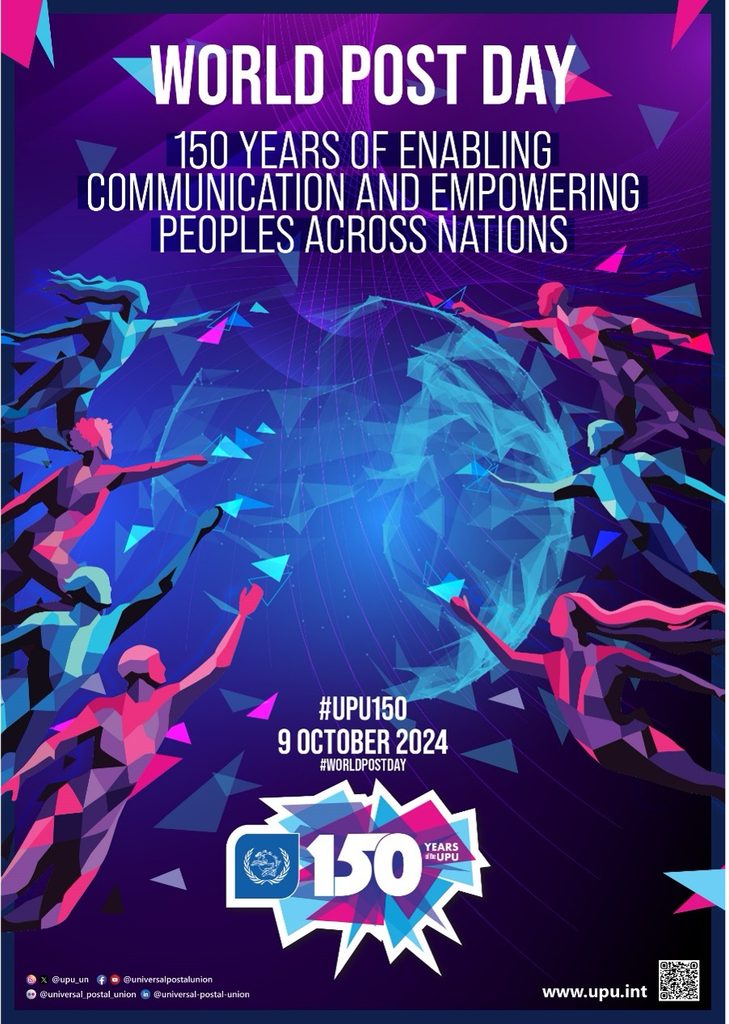
In keeping with the UPU’s “Together for Trust” message, operators should innovate so that postal services remain trusted by the public and become key infrastructure for social development. Reforms are continuing to sustain that role. The 150th-anniversary message—“150 years of enabling communication and empowering peoples across nations”—reflects postal services’ uninterrupted contribution worldwide, evident both in history and in daily life.
Conclusion
Postal workers demonstrated their commitment to continuous public service during both world wars and the COVID-19 pandemic. This tribute expresses the hope that, beyond the UPU’s 150-year journey, they will continue serving the public and adapting for thousands of years to come.
Happy World Post Day.
Ko Khaing (PTD)
References
1.https://www.upu.int/en/universal-postal-union/outreach-campaigns/150-year-of-the-upu
2.https://www.motc.gov.mm/my/Myanmar%20Post
Figure 1: The first UPU meeting
Figure 2: UPU headquarters
Figure 3: Poster commemorating the UPU’s 150th anniversary
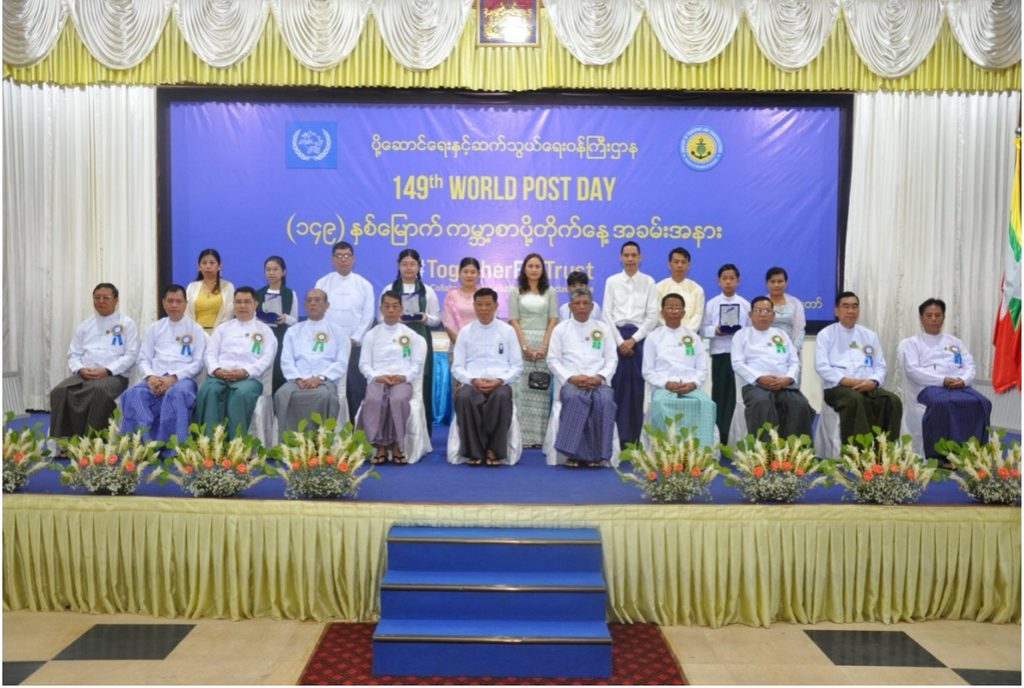
Figure 4: Photograph from the 149th World Post Day celebration